
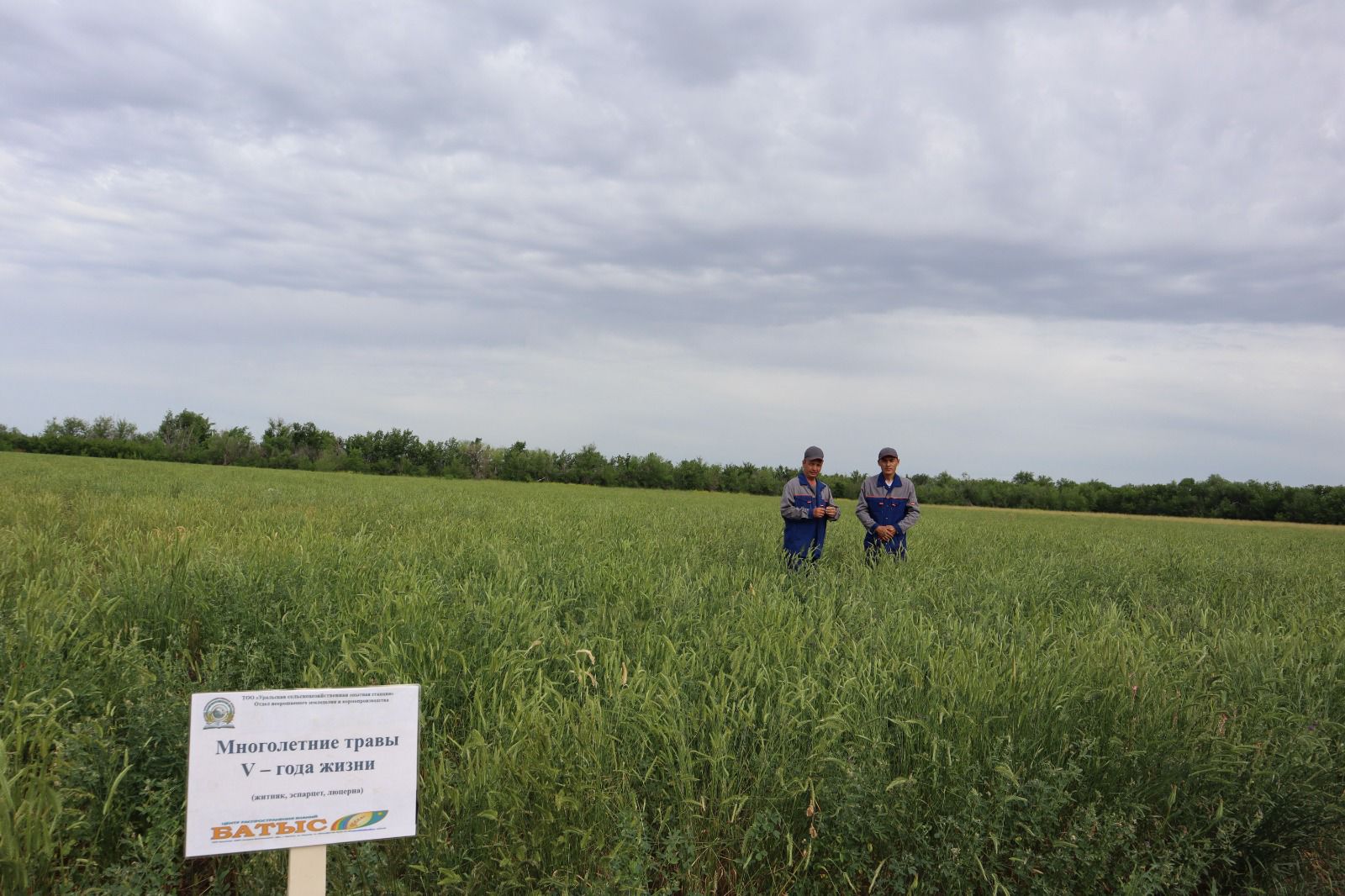
Scientists from the Ural Agricultural Experimental Station have obtained a patent for a utility model titled "Method for Improving Pastures in the Semi-Desert Zone of Western Kazakhstan." The development is aimed at restoring degraded lands and increasing the productivity of forage lands. The method is based on a mixture of perennial grasses: narrow-spiked wheatgrass, rush-like wildrye, and sand sainfoin. According to the developers, this combination of cereal and legume crops ensures maximum herbage productivity in semi-desert conditions. Sand sainfoin enhances the nutritional value of fodder: one kilogram of its hay contains up to 150–180 grams of digestible protein.
The technology involves soil treatment, early spring sowing of the grass mixture, and rolling. During the first five years, the herbage is used for haymaking, after which the lands can be used for grazing. According to the scientists, the implementation of this technology will make it possible to bring degraded lands in semi-desert regions of Kazakhstan into economic use and improve fodder supply for livestock farming.